Two working groups of the university alliance held their annual meetings in Budapest.
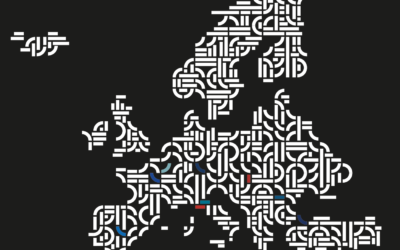
At the end of March, members of the working group coordinating communications for European university alliance EELISA gathered at BME. The alliance has ten working groups addressing various topics, and the communications group supports their visibility while also carrying out its own campaign activities. Last year, BME’s contributions included communications for the EELISA TDK and the EELISA Voice campaign.

| EELISA is an alliance of 10 European universities, primarily with a technical profile, with BME being the only member from Hungary. Partners include such renowned institutions as the École des Ponts ParisTech in France, the Friedrich-Alexander-Universität in Nuremberg, and the Technical University of Madrid. |
Members of the communications working group (WP3) typically coordinate their tasks online on a monthly basis, with the participation of delegates from all ten member universities. In addition, they meet in person once a year to evaluate the results achieved, streamline processes, and plan the next steps to increase awareness of EELISA through workshops.
This time, they examined the reach of content published on communication channels and the success of campaigns, sharing their experiences and the most effective communication tools with one another. They mapped out the key points and the timeline for communication over the next two years. The guests learned about the history of the BME campus and toured its key locations, including the Szkéné Theater in Building K.

The second day of the workshop coincided with the meeting of the EELISA working group on the creation and operation of communities (WP8), also held at BME. Thus, the two working groups collaborated on coordinating information relevant to communication and professional communities, as well as on opportunities for promotion both within and outside the organization.
A key focus was the development of the website for the digital presence of professional communities and the programme directory available on the central EELISA site (the BME EELISA subpage is here). Anikó Grad-Gyenge, Head of the Department of Business Law and an expert on the topic, presented European and global legal issues related to AI-generated online content in an online lecture, followed by a Q&A session.

The working group responsible for planning, organizing, and coordinating the communities’ workflows continued its work the following day. The members evaluated the calls for proposals (Joint Call) announced twice a year to support professional events and discussed the launch of the next cycle.
So far, every call has included 2–3 BME-led and several BME-affiliated proposals, the majority of which were successful. The week’s third EELISA event, under the leadership of BME and the Vision & Engineering EELISA community (Vis-E-Com) was actually realized with the support of such a Joint Call. BME and international students participated in the four-day programme titled “Green AI Hackathon: CO₂-Conscious Models for Sustainable Artificial Intelligence.”
During the hackathon, 16 students worked on sustainable artificial intelligence solutions, addressing topics such as CO₂-conscious AI training, spiking neural networks, and Edge AI applications, which resulted in three outstanding projects by the end of the event.
The work was coordinated by mentors from the co-organizing institutions: Andreas Kist (FAU) and his colleagues, as well as Calogero M. Oddo (SSSA). The programme’s main organizer, Ágnes Urbin, assistant professor at the Faculty of Mechanical Engineering, also shared her experiences from the event, as well as the plans for further developing the results with the communications team. The meeting was attended by Dale A. Martin, President of the EELISA Alliance; Sofia D’Aguiar, Executive Director; Yolanda Pividal, Director of Communications; Morris Villarroel, Vice Rector of UPM in Madrid; András Nemeslaki, Vice Rector for International Affairs at BME; and Balázs Vince Nagy, former Chair of the EELISA Executive Board.
The BME Communications Directorate was represented by Director Bálint Molnár and expert Márk Kovács. The community event was managed by Sarolta Tóvölgyi, Acting Vice Dean for International Affairs, Krisztina Schweigert-Kisida, doctoral student (GTK), and Sándor Kiss, Deputy Director (Institute of Mathematics). All programs were organized with the assistance of EELISA Coordinator Eszter Mischl.


Rector’s Office, Communications Directorate